
Materials & Sourcing
Custom Soft PVC Products:
A Buyer’s Guide
Soft PVC is widely used for custom products that need strong color separation, flexible structure, layered relief and lightweight handling. This guide explains where soft PVC works best, how product structure should be planned, what buyers should specify and what should be reviewed before production.
What Is Soft PVC?
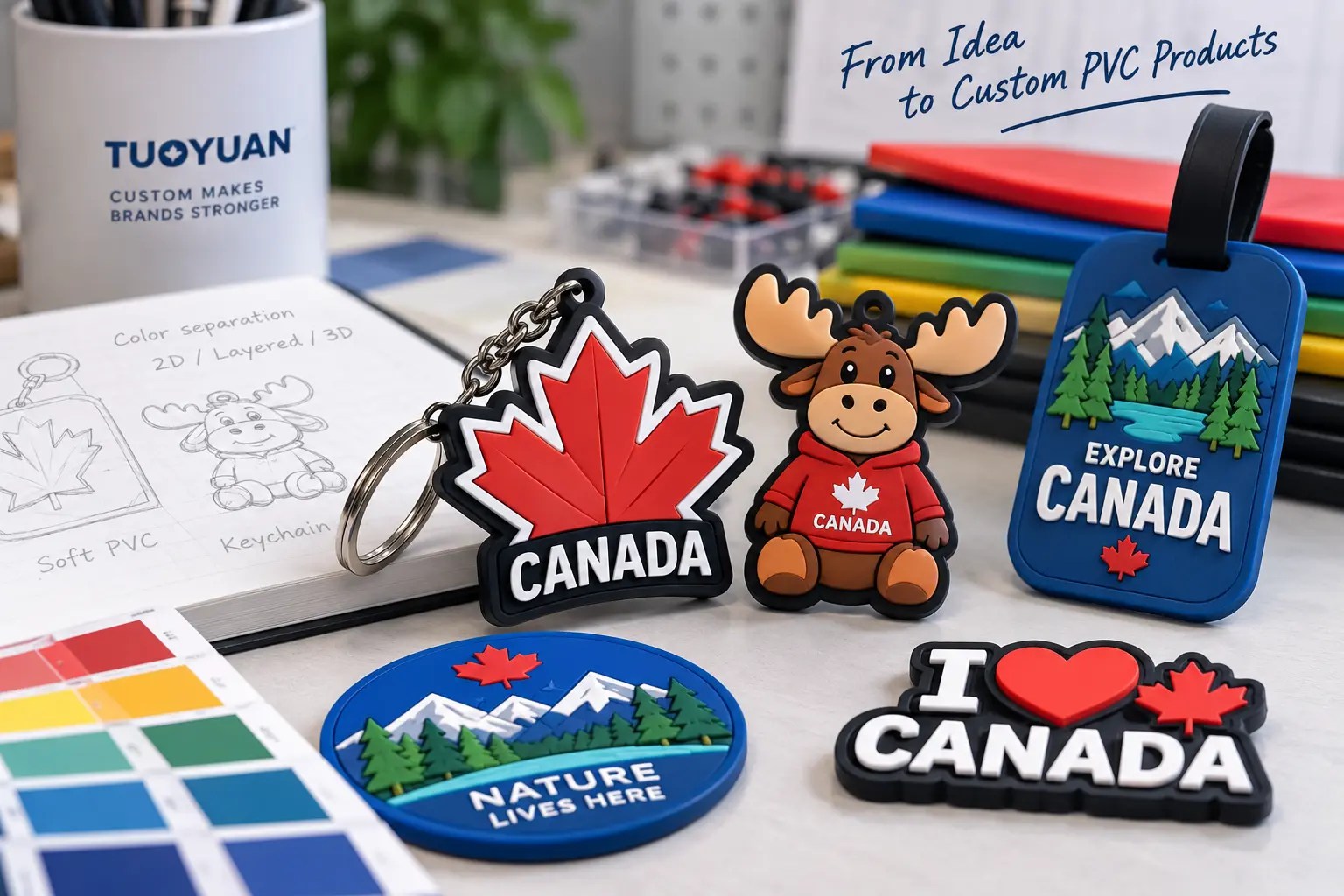
Soft PVC is a flexible polymer material widely used for molded promotional and souvenir products. It allows clear color separation, controlled relief levels and lightweight structures, making it suitable for designs that need bright colors, soft handling and repeatable molded detail.
What Can We Make in Soft PVC?
Six product families that account for most custom soft PVC development work.


When Should You Choose Soft PVC?
Soft PVC is most useful when the design depends on clear color separation, flexible handling and lightweight molded detail.
2D, Layered or Full 3D?
Soft PVC supports three structure routes. The right choice depends on how much depth and volume the product needs.
2D Flat
Best for
- logos
- text
- simple graphics
- flat promotional designs
Relatively thin structure with shallow molded separation between color areas.
Layered Relief
Best for
- logos with hierarchy
- characters
- landmarks
- more dimensional graphics
Selected areas can be raised above the background to create depth while keeping the product relatively flat.
Full 3D
Best for
- characters
- mascots
- small sculptural forms
Volume is developed around several sides and usually requires more complex modeling, tooling and inspection.
Design & Structure Considerations
Structure decisions made at the artwork stage are what keep tooling, molding and assembly predictable later.
Color Separation
Very small color areas, thin lines and narrow gaps should be reviewed before tooling because molded color separation has physical limits.
Thickness
Thickness affects flexibility, weight, perceived quality and the ability to support relief or attachments.
Front & Back Structure
The back may be flat, textured, printed, molded with branding or designed around magnets or attachments. It should be confirmed before tooling.
Attachment Points
Key rings, chains, magnets, clips, straps and functional hardware require the attachment area to be planned as part of the product structure.
Relief Levels
Too many height changes can increase complexity. Relief should support the visual design rather than adding unnecessary tooling and production steps.
Fine Details & Printing
Details that are too small for molded color separation may need printing, but wear and use conditions should be considered before choosing that solution.
Color, Relief & Surface Options
Soft PVC has its own set of surface and structure options, based on how color and relief are produced rather than on painted effects.
Molded Solid Color
Clean separated color areas produced directly in the molded PVC.
Layered Relief
Different heights used to create hierarchy and visual depth.
Printed Detail
Used for gradients, small text or graphic details that cannot be reproduced effectively through molded color separation alone.
Textured Back
Back surfaces can use texture for appearance, grip or structural purposes.
Embedded Branding
Logos or text can be molded directly into front or back surfaces.
Mixed Hardware
Soft PVC bodies can be combined with metal rings, chains, magnets, clips or functional components.
How Soft PVC Products Are Manufactured
A typical soft PVC project moves through production artwork, tooling, color preparation, molding, trimming, optional printing, assembly and final inspection. The exact production route depends on product structure, relief levels, number of colors, attachments and approved specification.
What Buyers Should Specify
Design Information
- Artwork or vector file
- Target dimensions
- Required thickness
- 2D / layered / full 3D direction
- Front and back requirements
- Color references
- Relief structure
- Attachment or function
Commercial & Market Information
- Estimated quantity per design
- Number of SKUs
- Destination market
- Intended users
- Packaging requirement
- Testing / compliance requirement
- Required arrival date
- NDA requirement where applicable
Open items
If some details have not yet been decided, identify them clearly so assumptions can be separated from confirmed project specifications.
Before quotation
Structure direction, thickness, colour references and attachments should be confirmed before tooling and sampling are scheduled.
Sample & Approval
Sampling is approved in four gates rather than treated as a single yes/no step.
ARTWORK
Dimensions, colors, relief and front/back construction
STRUCTURE
Thickness, attachment points, hardware and functional details
SAMPLE
Color, flexibility, molding quality and assembly
PACKAGING
Fit, product protection and retail presentation
Sampling time depends on artwork preparation, tooling complexity, number of colors, structure, revisions, attachments and packaging requirements. Project timing should be confirmed against the final specification. Tooling complexity also drives the commercial side of the project; the breakdown is in custom soft PVC tooling and unit cost factors.
Packaging, Flexibility & Deformation Risk
Soft PVC is less brittle than polyresin, but flexible products can still deform, mark or tangle if they are packed under unsuitable pressure, heat or hardware contact.
Compliance & Destination Market
Compliance should be evaluated according to the finished product, material formulation, intended user, destination market and required test scope. Standards such as REACH, EN 71, CPSIA, phthalate restrictions or customer-specific requirements do not automatically apply to every project in the same way.
Before quotation, buyers should identify:
- Destination country or region
- Intended user
- Restricted-substance requirements
- Phthalate requirements
- Heavy-metal requirements
- Retailer or brand protocols
- Packaging and labeling requirements
One Collection, Multiple Materials
Soft PVC in Multi-Material Collections
Soft PVC does not need to be used for every product in a collection. A coordinated merchandise program may use soft PVC for flexible colorful items, polyresin for sculpted display pieces and metal for compact premium or functional products.
POLYRESIN
Sculpted & Hand-Painted
- Figurines
- Snow Globes
- Sculpted Display Pieces
Soft PVC
Flexible & Colorful
- Keychains
- Magnets
- Luggage Tags
METAL
Premium & Functional
- Badges
- Coins
- Bottle Openers
Selected Applications


Frequently Asked Questions
What types of products are well suited to soft PVC?+
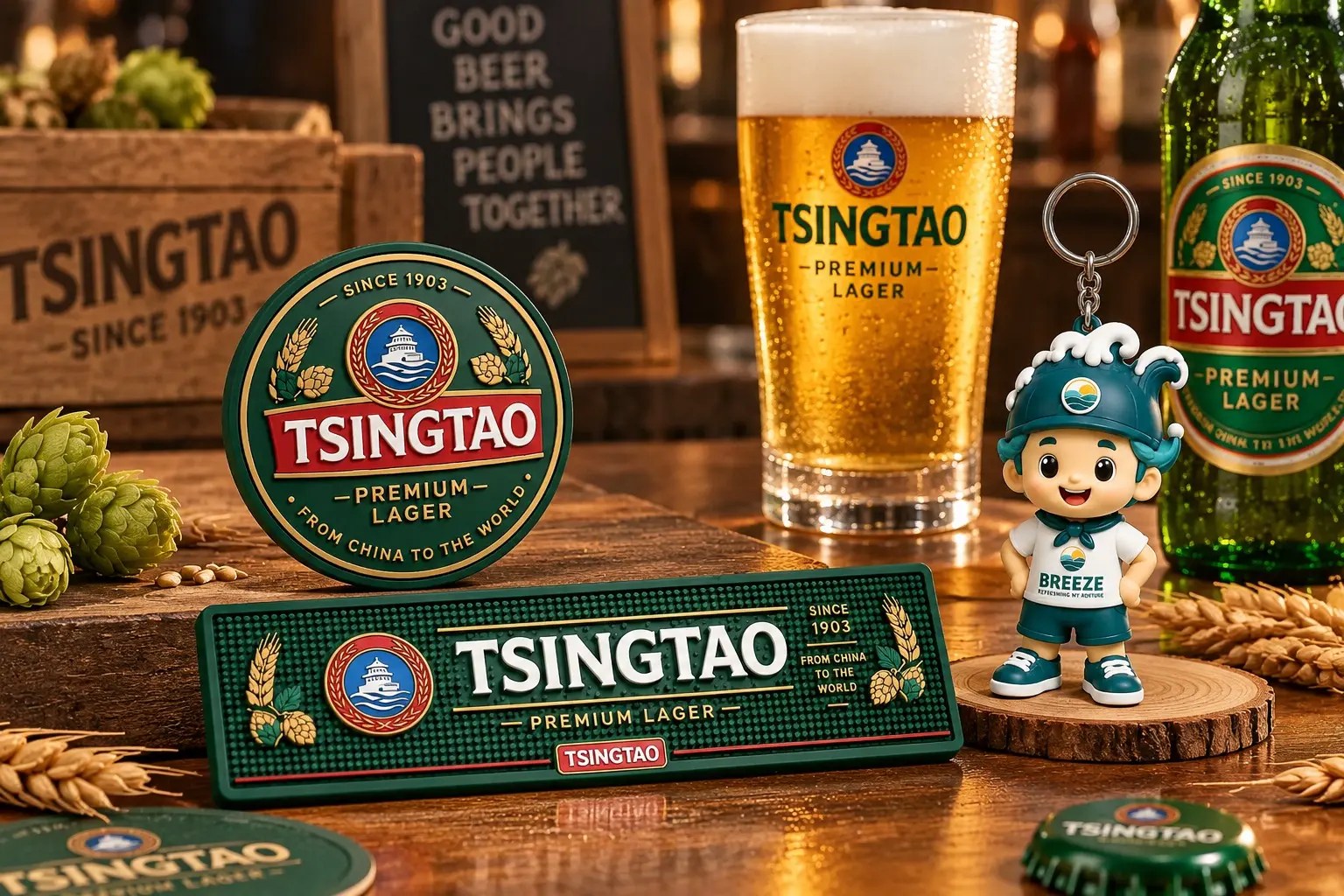
Soft PVC is well suited to keychains, fridge magnets, coasters, bar mats, luggage tags and selected three-dimensional promotional products that benefit from flexible structure and strong color separation.
What is the difference between 2D, layered and full 3D soft PVC?+
2D designs remain relatively flat, layered designs use multiple relief heights, and full 3D designs create volume around several sides. The best option depends on the artwork, intended use and required visual depth.
Can soft PVC include printed details?+
Yes. Printing can be used for gradients, small text and details that are difficult to reproduce through molded color separation alone. Wear conditions should be considered before selecting a printed solution.
Can soft PVC products use metal hardware?+
Yes. Key rings, chains, clips, magnets and other components can be combined with molded soft PVC when the attachment area and product structure are designed accordingly.
Can soft PVC deform during storage or transport?+
Flexible products may deform under prolonged heat, compression or unsuitable packing. Packaging should be selected according to size, thickness, flexibility and hardware.
What information is needed before quotation?+
Buyers should provide artwork, dimensions, structure preference, color references, quantity, attachments, packaging, destination market and any testing or compliance requirements.
Before You Request a Quote
- Artwork or vector file
- Product dimensions
- Required thickness
- 2D / layered / full 3D direction
- Color references
- Front and back requirements
- Attachment / function
- Quantity
- Packaging
- Testing / compliance
- Destination
- Required arrival date
Ready to Start Your Custom Soft PVC Project?
Send your artwork, target dimensions, quantity, intended use, attachment requirements and packaging direction. Our team can review the structure, identify production risks and confirm the information required before sampling and quotation.